Inspiration
Real Wedding Stories: Five Couples Who Made Their Day Their Own
May 7, 2026 · 12 min read · By Pretty Papery
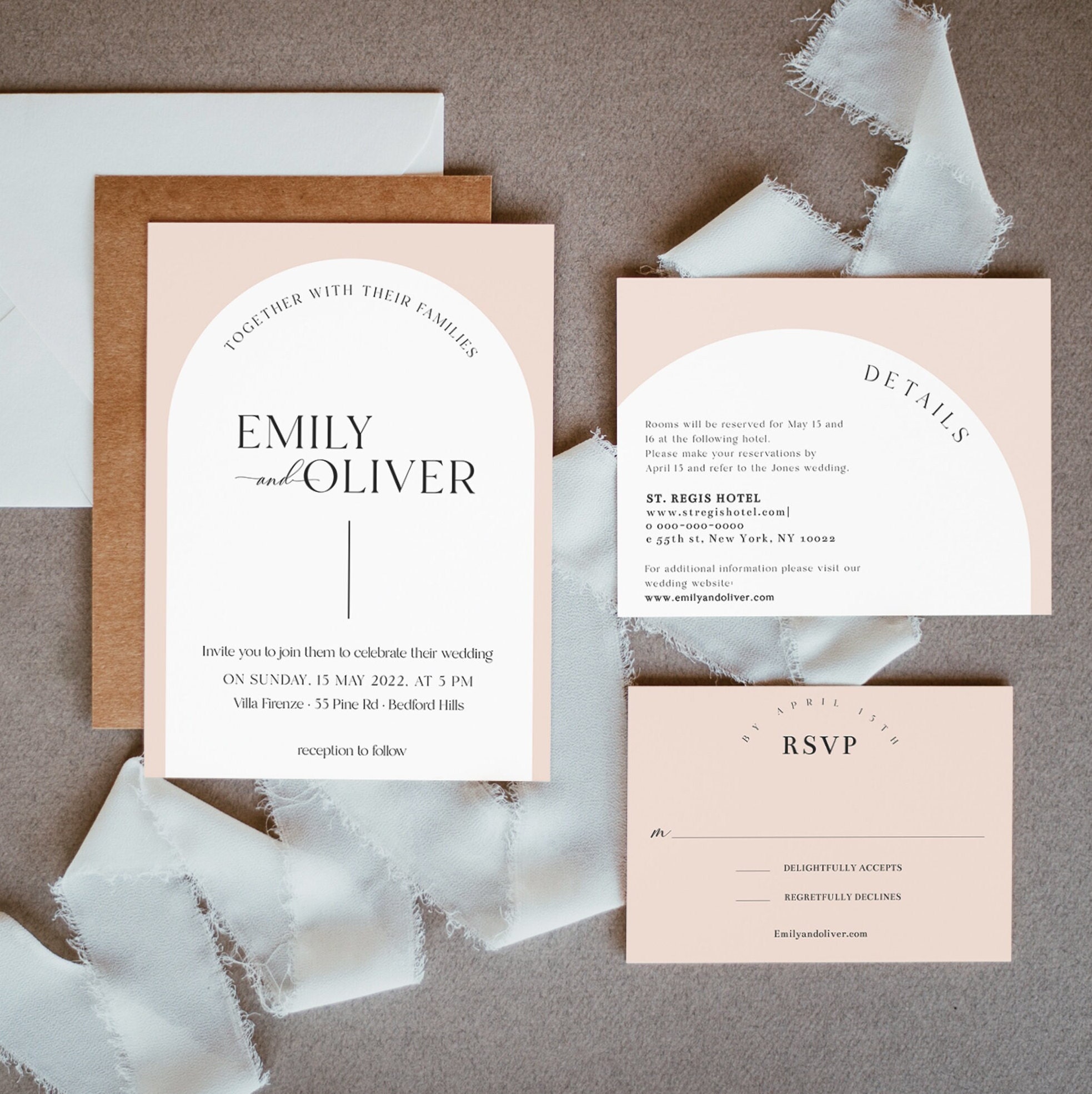
Wedding inspiration online tends to look the same. Same arches, same toned-down beige, same Pinterest staple shots. We wanted to show something else: five real couples we worked with in 2025 who built weddings that felt like them. None of them are influencers. None spent six figures. All of them did at least one thing differently — and that one thing is what made the day unforgettable.
Names changed slightly for privacy; everything else is exactly as it happened.
Names changed slightly for privacy; everything else is exactly as it happened.
Lena & Tom — A garden wedding without a single rose (Hamburg, May)
The setup: 60 guests, Lena's grandmother's garden in Blankenese, Hamburg. Lena is a horticulturalist; Tom runs a small architecture studio. They wanted "a garden party that happened to be a wedding," not a wedding that happened to use a garden.
The defining choice: they used only seasonal local flowers — wild lilac, lupines, foxglove, viburnum, sweet pea — sourced from three regional farms. No imported roses, no peonies flown in from Holland, no styrofoam bases. The bouquets looked alive, slightly chaotic, pollen everywhere. Bees showed up uninvited. Nobody minded.
The detail nobody forgot: instead of place cards with names, each guest had a small terracotta pot with a single labelled herb plant — basil, mint, thyme, rosemary, sage. Their seat was wherever their pot was. After the dinner, guests took the herbs home. A year later, Lena got texts: "Your basil is still going. Thinking of you."
What they'd tell other couples: "Pick one organising principle and let everything else fall out of it. Ours was 'plants matter.' That decided the flowers, the favours, the food (vegetable-forward, not vegetarian), the photo style. We didn't have to make 200 small decisions because the principle made them for us."
The defining choice: they used only seasonal local flowers — wild lilac, lupines, foxglove, viburnum, sweet pea — sourced from three regional farms. No imported roses, no peonies flown in from Holland, no styrofoam bases. The bouquets looked alive, slightly chaotic, pollen everywhere. Bees showed up uninvited. Nobody minded.
The detail nobody forgot: instead of place cards with names, each guest had a small terracotta pot with a single labelled herb plant — basil, mint, thyme, rosemary, sage. Their seat was wherever their pot was. After the dinner, guests took the herbs home. A year later, Lena got texts: "Your basil is still going. Thinking of you."
What they'd tell other couples: "Pick one organising principle and let everything else fall out of it. Ours was 'plants matter.' That decided the flowers, the favours, the food (vegetable-forward, not vegetarian), the photo style. We didn't have to make 200 small decisions because the principle made them for us."
Sophie & Marc — An elopement that became a film (Tuscany, October)
The setup: 12 guests — parents, siblings, two close friends each. Vineyard near Montepulciano, Italy. Sophie is German, Marc is French. They live in Berlin.
The defining choice: they hired a videographer instead of a photographer. Just one. Total photo budget: €0 (they used phones for stills). Total video: €4,200 for two days of filming and a 12-minute edited film with original score.
Their reasoning: "Nobody watches their wedding photos after year three. We wanted to actually watch our wedding — the way our parents kissed, the way Marc's sister cried, my grandfather's hand on my back during the ceremony. A photo can't do those things."
The detail nobody forgot: the ceremony was in two languages with a deliberate pause. Sophie spoke German vows. Marc spoke French. Then they were silent together for 20 seconds, just looking. The film captures that silence. It's the most-watched section.
What they'd tell other couples: "Decide what you want to remember specifically. Don't trust the default of "hire a photographer." If you want to remember motion, voice, laughter — hire a videographer. If you want to remember light, faces, stillness — photographer. Both is wonderful. But if you can only afford one, pick the one that matches what you actually want to relive."
The defining choice: they hired a videographer instead of a photographer. Just one. Total photo budget: €0 (they used phones for stills). Total video: €4,200 for two days of filming and a 12-minute edited film with original score.
Their reasoning: "Nobody watches their wedding photos after year three. We wanted to actually watch our wedding — the way our parents kissed, the way Marc's sister cried, my grandfather's hand on my back during the ceremony. A photo can't do those things."
The detail nobody forgot: the ceremony was in two languages with a deliberate pause. Sophie spoke German vows. Marc spoke French. Then they were silent together for 20 seconds, just looking. The film captures that silence. It's the most-watched section.
What they'd tell other couples: "Decide what you want to remember specifically. Don't trust the default of "hire a photographer." If you want to remember motion, voice, laughter — hire a videographer. If you want to remember light, faces, stillness — photographer. Both is wonderful. But if you can only afford one, pick the one that matches what you actually want to relive."
Mira & Elias — Two faiths, one ceremony (Berlin, August)
The setup: 110 guests, hotel ballroom in Berlin-Mitte. Mira is from a German-Turkish family (Muslim); Elias is from a German Protestant family. They wanted both families to feel honoured — and neither to feel like guests at the other's event.
The defining choice: they had two officiants who co-led the ceremony. An Imam and a Pastor. They met three times before the wedding to design a structure that wove both traditions: Quran recitation, then Bible passage, then Mira and Elias's own vows in German, then a joint blessing. 38 minutes total. Not too long, not rushed.
The Imam and Pastor became friends during the planning. The Pastor came to a Friday prayer at the Imam's mosque a month before the wedding. The Imam attended the rehearsal at the Pastor's church. By the wedding day, their interplay felt warm, not performative.
The detail nobody forgot: the food. Mira's family runs a halal catering business in Berlin. They served a full traditional Turkish wedding feast — meze, lahmacun, lamb, baklava — alongside German classics like Kartoffelsalat and Schwarzwälder Kirschtorte. Both families had "their" foods, in the same room, on the same plates. Many guests filled their plates with one tradition's mains and the other's dessert.
What they'd tell other couples: "We were told repeatedly that we'd have to 'pick one' — choose which tradition was primary. We refused. We worked harder, spent more time on the ceremony script, and the result was a wedding that felt like both of us, not a compromise. Don't let other people's logistical nervousness become your aesthetic."
The defining choice: they had two officiants who co-led the ceremony. An Imam and a Pastor. They met three times before the wedding to design a structure that wove both traditions: Quran recitation, then Bible passage, then Mira and Elias's own vows in German, then a joint blessing. 38 minutes total. Not too long, not rushed.
The Imam and Pastor became friends during the planning. The Pastor came to a Friday prayer at the Imam's mosque a month before the wedding. The Imam attended the rehearsal at the Pastor's church. By the wedding day, their interplay felt warm, not performative.
The detail nobody forgot: the food. Mira's family runs a halal catering business in Berlin. They served a full traditional Turkish wedding feast — meze, lahmacun, lamb, baklava — alongside German classics like Kartoffelsalat and Schwarzwälder Kirschtorte. Both families had "their" foods, in the same room, on the same plates. Many guests filled their plates with one tradition's mains and the other's dessert.
What they'd tell other couples: "We were told repeatedly that we'd have to 'pick one' — choose which tradition was primary. We refused. We worked harder, spent more time on the ceremony script, and the result was a wedding that felt like both of us, not a compromise. Don't let other people's logistical nervousness become your aesthetic."
Hannah & Lukas — A wedding written by the season (Pfalz, September)
The setup: 75 guests, Hannah's family vineyard in the Pfalz. Lukas is a Berlin-based illustrator; Hannah does marketing for a publishing house. They got married a week before the wine harvest.
The defining choice: they let the vineyard's working calendar dictate every aesthetic decision. Late September means: ripe Riesling grapes still on vines (used for ceremony arch), early autumn light (golden, soft, the photographer was thrilled), zero need for additional florals (the vineyard already looked like an Italian dream), the family's own wine on every table, harvested just months earlier.
The wedding party walked between vine rows during the ceremony. The dinner was served on long shared tables under a canopy of vines. The cake was a tower of fresh figs and locally made goat cheese instead of frosting. Dessert was a wine tasting with Hannah's father guiding through the family's three estate wines.
The detail nobody forgot: the speech from Hannah's father. He grew up working those vines. He spoke about how each season's wine carries the memory of that year — "the rain in May, the heat in July, your wedding in September." The 2025 Riesling will, he said, be known in their family as the Hochzeitsjahrgang. He gave each guest a bottle to age and open ten years from now.
What they'd tell other couples: "Find your seasonal moment and lean into it. Trying to make a winter wedding feel like Tuscany costs three times more than letting it be a winter wedding. The most photographable, the cheapest, and the most memorable wedding is the one where you stop fighting where and when you are."
The defining choice: they let the vineyard's working calendar dictate every aesthetic decision. Late September means: ripe Riesling grapes still on vines (used for ceremony arch), early autumn light (golden, soft, the photographer was thrilled), zero need for additional florals (the vineyard already looked like an Italian dream), the family's own wine on every table, harvested just months earlier.
The wedding party walked between vine rows during the ceremony. The dinner was served on long shared tables under a canopy of vines. The cake was a tower of fresh figs and locally made goat cheese instead of frosting. Dessert was a wine tasting with Hannah's father guiding through the family's three estate wines.
The detail nobody forgot: the speech from Hannah's father. He grew up working those vines. He spoke about how each season's wine carries the memory of that year — "the rain in May, the heat in July, your wedding in September." The 2025 Riesling will, he said, be known in their family as the Hochzeitsjahrgang. He gave each guest a bottle to age and open ten years from now.
What they'd tell other couples: "Find your seasonal moment and lean into it. Trying to make a winter wedding feel like Tuscany costs three times more than letting it be a winter wedding. The most photographable, the cheapest, and the most memorable wedding is the one where you stop fighting where and when you are."
Clara & Theo — A 30-minute ceremony and a really long Sunday brunch (Frankfurt, June)
The setup: 45 guests, civil ceremony at the Standesamt Frankfurt at 11 AM Saturday. Clara is a doctor; Theo is a neuroscientist. They didn't want a reception. They wanted a brunch with all the people they loved.
The defining choice: they completely skipped the wedding reception. After the 30-minute Standesamt ceremony, they took 90 minutes for portraits with a photographer at a nearby park, then went home with their immediate family for a quiet dinner. The next day, Sunday, they hosted a 5-hour brunch at a friend's apartment with all 45 guests. No DJ, no first dance, no formal toasts. Just food, conversation, the apartment's record player, and a long afternoon.
Total cost: €4,800. About a sixth of what their friends had spent.
The detail nobody forgot: Clara's grandmother — 91 years old, would have struggled with a long evening reception — stayed for the entire 5-hour brunch. She didn't have to leave at 9 PM exhausted. She drank coffee, ate cake, told stories at three different tables, and went home at 4 PM in daylight. Three weeks later she said it was the best day she'd had in a year.
What they'd tell other couples: "The wedding-industrial complex tells you a 'real wedding' has a reception with a band and a first dance and 200 people. None of that was for us. Our wedding was about people we love being in one room with no agenda. It cost less, lasted longer, and we didn't have to pretend to enjoy a single song. Permission to design what fits you is the most underrated wedding gift you can give yourself."
The defining choice: they completely skipped the wedding reception. After the 30-minute Standesamt ceremony, they took 90 minutes for portraits with a photographer at a nearby park, then went home with their immediate family for a quiet dinner. The next day, Sunday, they hosted a 5-hour brunch at a friend's apartment with all 45 guests. No DJ, no first dance, no formal toasts. Just food, conversation, the apartment's record player, and a long afternoon.
Total cost: €4,800. About a sixth of what their friends had spent.
The detail nobody forgot: Clara's grandmother — 91 years old, would have struggled with a long evening reception — stayed for the entire 5-hour brunch. She didn't have to leave at 9 PM exhausted. She drank coffee, ate cake, told stories at three different tables, and went home at 4 PM in daylight. Three weeks later she said it was the best day she'd had in a year.
What they'd tell other couples: "The wedding-industrial complex tells you a 'real wedding' has a reception with a band and a first dance and 200 people. None of that was for us. Our wedding was about people we love being in one room with no agenda. It cost less, lasted longer, and we didn't have to pretend to enjoy a single song. Permission to design what fits you is the most underrated wedding gift you can give yourself."
What these five weddings have in common
Different cities. Different sizes. Different budgets — €4,800 to €34,000. Different aesthetics. But three threads run through all of them:
1. Each chose one principle. Plants. Film. Two faiths. Season. Brunch. Each principle organised the rest of the wedding.
2. Each said no to something most couples say yes to. No imported flowers. No photographer. No "pick one tradition." No additional florals. No reception.
3. Each had a moment nobody saw coming. The herb pots, the 20-second silence, the Imam and Pastor laughing together, the grandfather's wine speech, the grandmother staying till 4 PM. None of these were on Pinterest.
Your wedding doesn't have to be different to be unforgettable. It just has to be yours. The standard package gets used because nobody asked the better question — what is one thing about us that should be in this day?
If you're planning, start there. Then let everything else organise around it. And when you're ready, our stationery collection can be edited to fit any of the directions above — colours, fonts, photos, all in five minutes.
1. Each chose one principle. Plants. Film. Two faiths. Season. Brunch. Each principle organised the rest of the wedding.
2. Each said no to something most couples say yes to. No imported flowers. No photographer. No "pick one tradition." No additional florals. No reception.
3. Each had a moment nobody saw coming. The herb pots, the 20-second silence, the Imam and Pastor laughing together, the grandfather's wine speech, the grandmother staying till 4 PM. None of these were on Pinterest.
Your wedding doesn't have to be different to be unforgettable. It just has to be yours. The standard package gets used because nobody asked the better question — what is one thing about us that should be in this day?
If you're planning, start there. Then let everything else organise around it. And when you're ready, our stationery collection can be edited to fit any of the directions above — colours, fonts, photos, all in five minutes.